The 4 C's — and what actually matters
Every diamond we set is chosen for real brilliance, not just a number on a certificate. Here's what we look at, in plain English, and how lab-grown compares to natural.
Cut
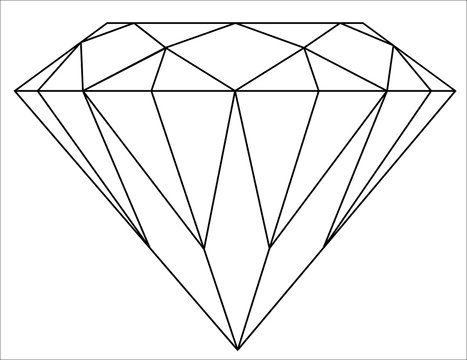
How well the diamond is shaped and faceted. This is what actually creates sparkle — a well-cut stone reflects light back beautifully, while a poor cut can make even a high-grade diamond look dull. Of the four, cut has the biggest impact on how a diamond looks to the eye.
Colour
How colourless the stone is. Diamonds are graded on a scale from D (colourless) to Z (a visible warm tint). We favour the colourless end of the scale, where a stone reads bright and white rather than yellow.
Clarity
How clean the stone is. Every diamond has natural characteristics called inclusions — tiny marks formed under the earth. Clarity grades how visible they are, from Flawless down to Included. Most inclusions are invisible to the naked eye, so we choose stones that look clean in real life, not just on paper.
Carat
The diamond's weight, not its size — a well-cut stone can look larger than its carat weight suggests. We'll always show you how a stone actually wears on the hand, not just the number on the certificate.
Why Proportions Matter
Cut isn't the diamond's shape — it's how precisely it's proportioned and faceted. That precision decides whether light bounces back out through the top, or leaks away underneath.
content/diamond-standard.md asimages/cuts.png.The Clarity Scale
Clarity grades are set by how visible a stone's natural inclusions are under 10x magnification — not to the naked eye. Here's what each tier actually means.
No inclusions visible under 10x magnification. The rarest and cleanest tier on the scale.
Inclusions are minute — only seen under 10x magnification by a trained eye.
Inclusions are minor and hard to spot even at 10x magnification.
Inclusions are noticeable at 10x. SI2 stones may occasionally show a mark to the naked eye.
Inclusions are obvious at 10x, and this range isn't eye-clean — visibility can affect brilliance and sparkle.
The Colour Scale
Diamond colour runs from D to Z, measuring how close to pure colourless a stone is. Here's what each range actually looks like face-up.
The whitest, most valuable range on the scale. No warmth is visible, even to a trained eye.
A faint warmth only shows up next to a higher grade stone side by side. Excellent value for the money.
A very slight warmth, usually only noticeable in larger stones or under close comparison.
A light warmth that can be visible to the naked eye, more so in larger carat weights.
Warmth is clearly visible without needing a stone to compare it against.
The most noticeable warmth on the scale — sometimes chosen deliberately for a warmer, vintage look.
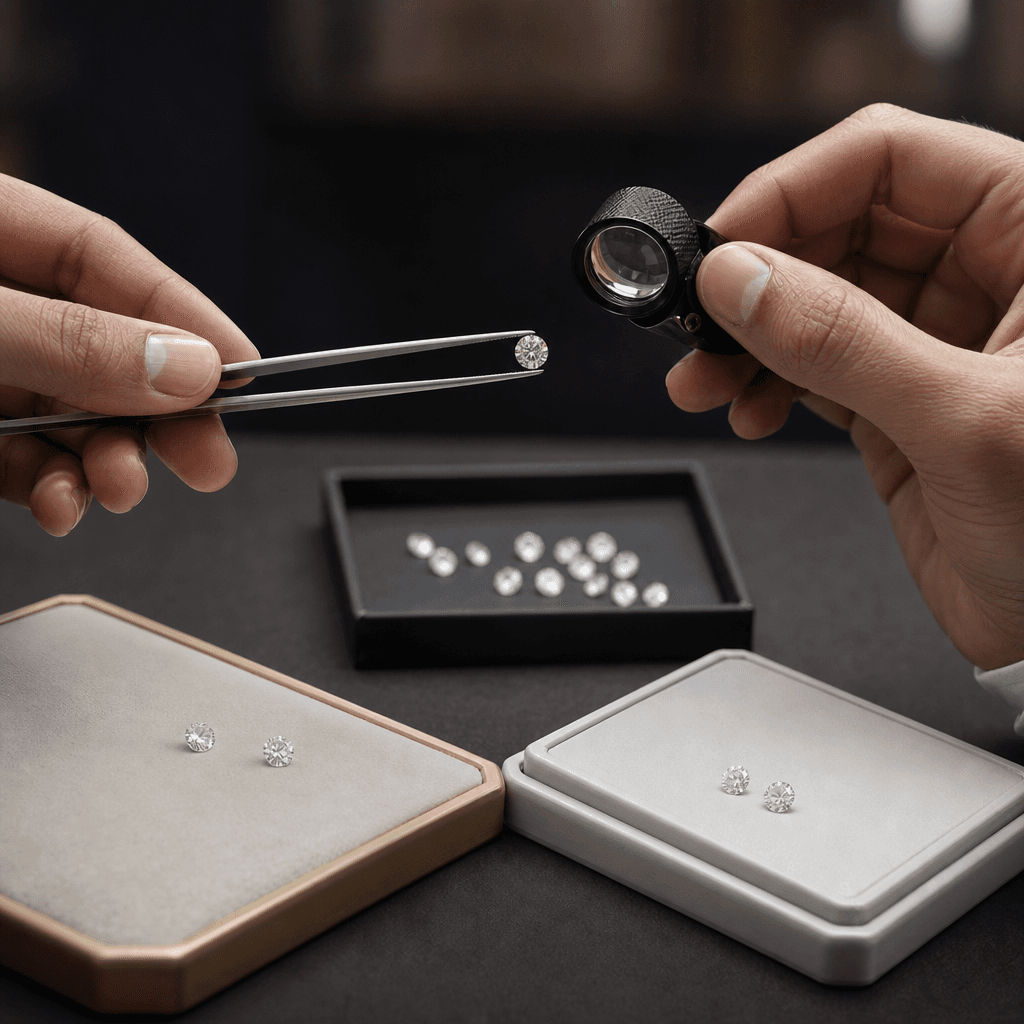
Both are real diamonds
A lab-grown diamond is chemically, physically and optically identical to a natural one — it's grown in a controlled environment instead of forming underground over billions of years. To the naked eye, and even under most jewellers' loupes, you can't tell the two apart. Every diamond we sell, natural or lab-grown, is independently certified by GIA or IGI, so you know exactly what you're getting either way.
- Look
- Identical to the naked eye — no visual difference
- Composition
- Identical — both are pure carbon crystal
- Origin
- Natural forms underground over billions of years; lab-grown is grown in weeks
- Price
- Lab-grown typically costs less for the same size and quality
- Certification
- Both independently graded by GIA or IGI
Ready to see it for yourself?
Browse our collection or get in touch and we'll talk you through the diamond that's right for your ring.
Shop the Collection